Studio note
Why serious drip conversion depends on zones, pressure, filtration, maintenance access, and plant establishment rather than a quick swap from spray heads.
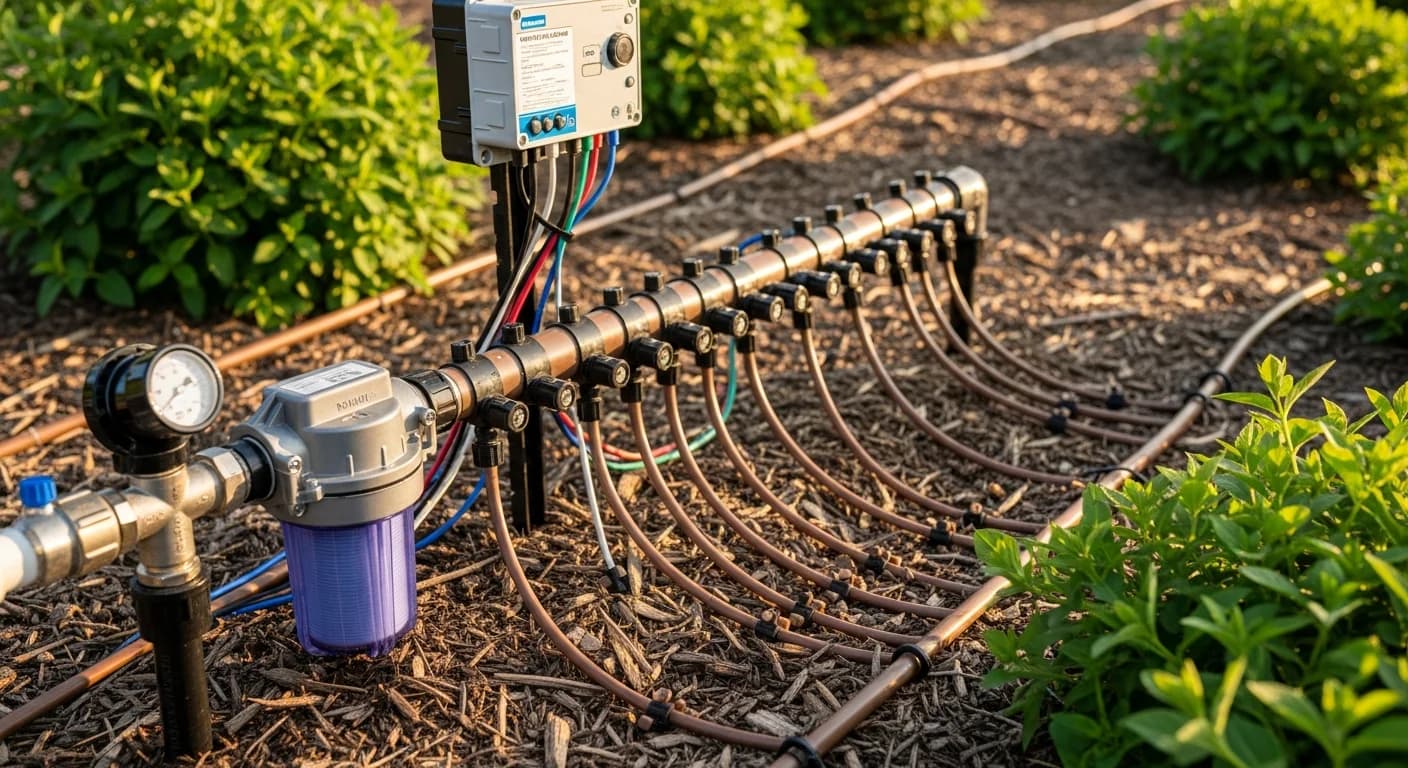
Drip irrigation fails when it is treated as a product instead of a system. The visible tubing is the least important part. The real work is pressure regulation, filtration, zone logic, emitter spacing, flushing points, valve access, and a controller schedule that changes as plants establish.
Design the zones before buying parts
A mature olive, a new salvia mass, a container run, and a shaded fern pocket should not all be on the same watering logic. Good drip design separates zones by exposure, root depth, soil, and plant water needs. That is what lets the site feel green without overwatering the whole property.
Pressure and filtration decide longevity
Most residential drip problems begin with pressure that is too high, filtration that is ignored, or tubing that cannot be flushed. A serious install includes pressure regulation, accessible filters, clear valve labeling, and a maintenance plan for emitters and lines.
Field rule
If a drip system cannot be inspected, flushed, and adjusted, it is not a low-maintenance system. It is a hidden future problem.
The establishment period is different
New planting needs a different water rhythm than established planting. The first months often require closer monitoring and temporary adjustments. After rooting, schedules should be reduced and tuned to weather, exposure, and observed plant response.