Studio note
Why refined outdoor lighting is about what you don't see: brass fixtures, subtle zoning, and calibrated scenes that make the garden useful after dark.
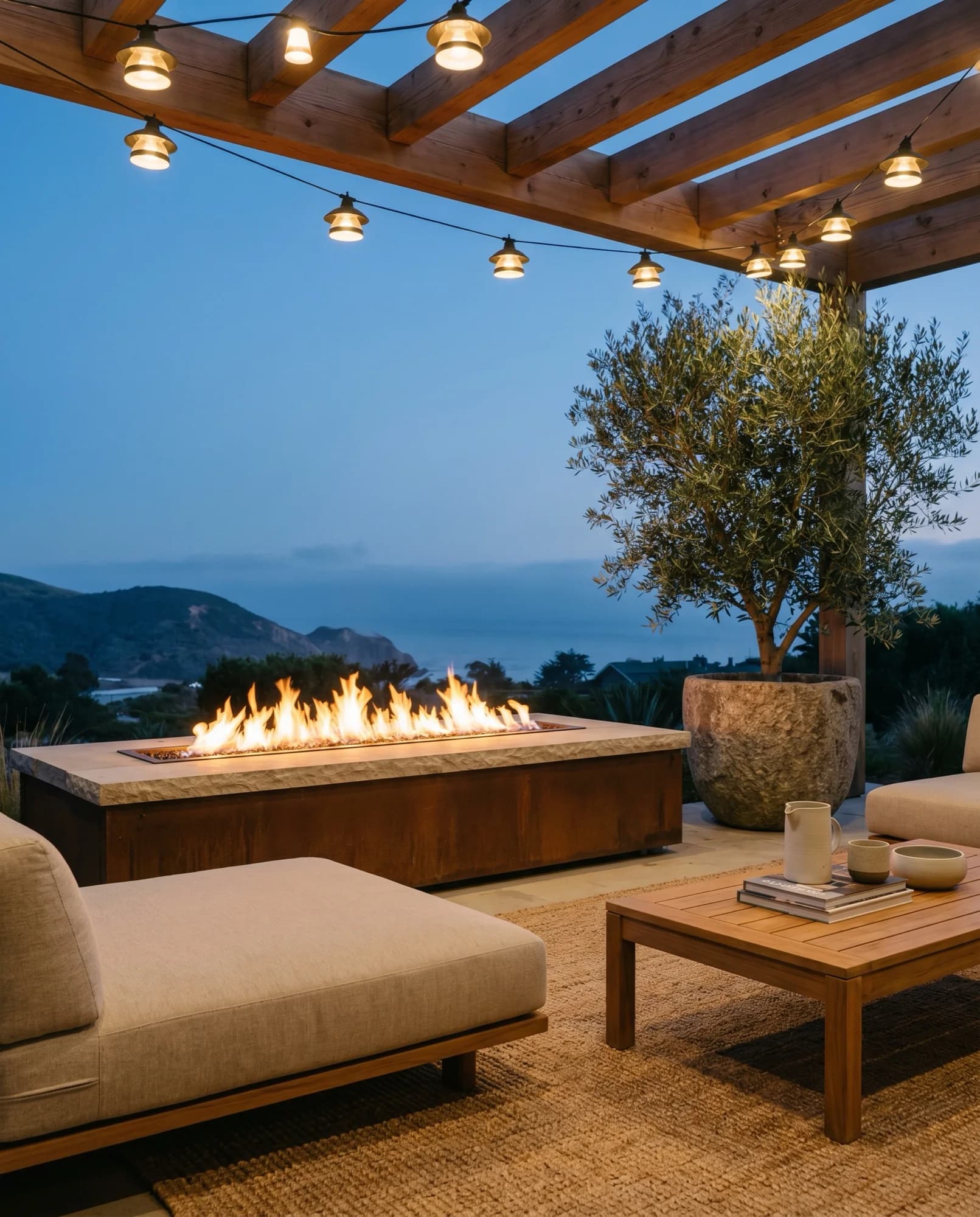
What happens after sunset is just as important as the daytime composition. The golden hour in Southern California is legendary, but the true test of an outdoor space is how it feels when dusk settles into night. At GREENPLACE, we don't 'light up' a yard; we illuminate architecture, specimen trees, and pathways with intention. The goal is never to recreate daylight. The goal is to create ambiance, dimension, and safe passage while keeping the light source practically invisible.
Painting with light: less is always more
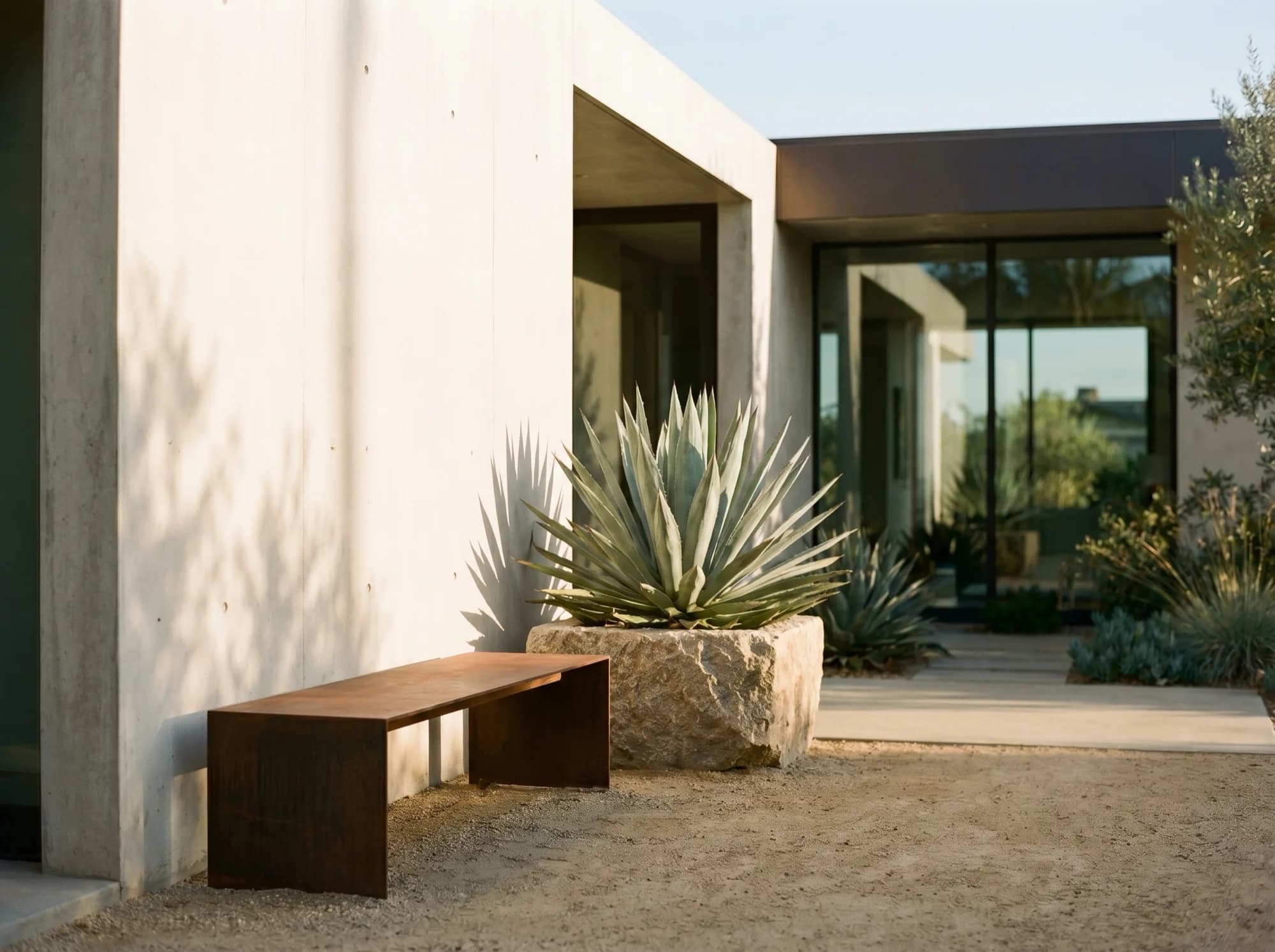
The most common mistake in residential outdoor lighting is the 'runway effect'—spacing path lights uniformly every six feet along a walkway. Instead, we use a technique called 'painting with light.' By staggering fixtures and using softer, downward-facing directional lights, we illuminate only what needs to be seen. A subtle wash of light across a textured stone retaining wall or a gentle uplight catching the silver-green canopy of a heritage olive tree creates depth and drama that uniform lighting ruins.
The 2700K Standard
We typically specify warm-white light around 2700K when the site calls for a residential evening scene. That temperature keeps the garden close to the glow of incandescent light or fire, creating a welcoming atmosphere rather than a sterile commercial feel.
Material matters: solid brass and copper
Coastal climates in Orange County and Los Angeles are brutal on lower-tier aluminum or composite fixtures. Salt air, morning marine layers, and intense afternoon sun will strip and corrode those materials within a few seasons. We specify solid brass, copper, and architectural bronze fixtures for our lighting systems. These materials do not simply endure the elements; they actively age with them, developing a rich, natural patina that blends perfectly into the garden.
Smart zoning and automation
A serious lighting system is divided into zones. The lighting required for an intimate dinner on the patio is different from the lighting needed for safe arrival when the house is empty. We integrate zoning into smart transformers where appropriate, allowing homeowners to set scenes from a phone or control panel.