Studio note
A board-ready guide to California's nonfunctional turf rule: how to classify turf, phase the work, protect trees, and turn compliance into a better common-area landscape.
AB 1572 is not a design style. It is a water-use constraint that affects how commercial, institutional, and HOA common-area turf is irrigated with potable water. For a board, the risk is not only compliance. The risk is replacing grass quickly and ending up with a hotter, thinner, cheaper-looking property.
Start by separating functional and nonfunctional turf
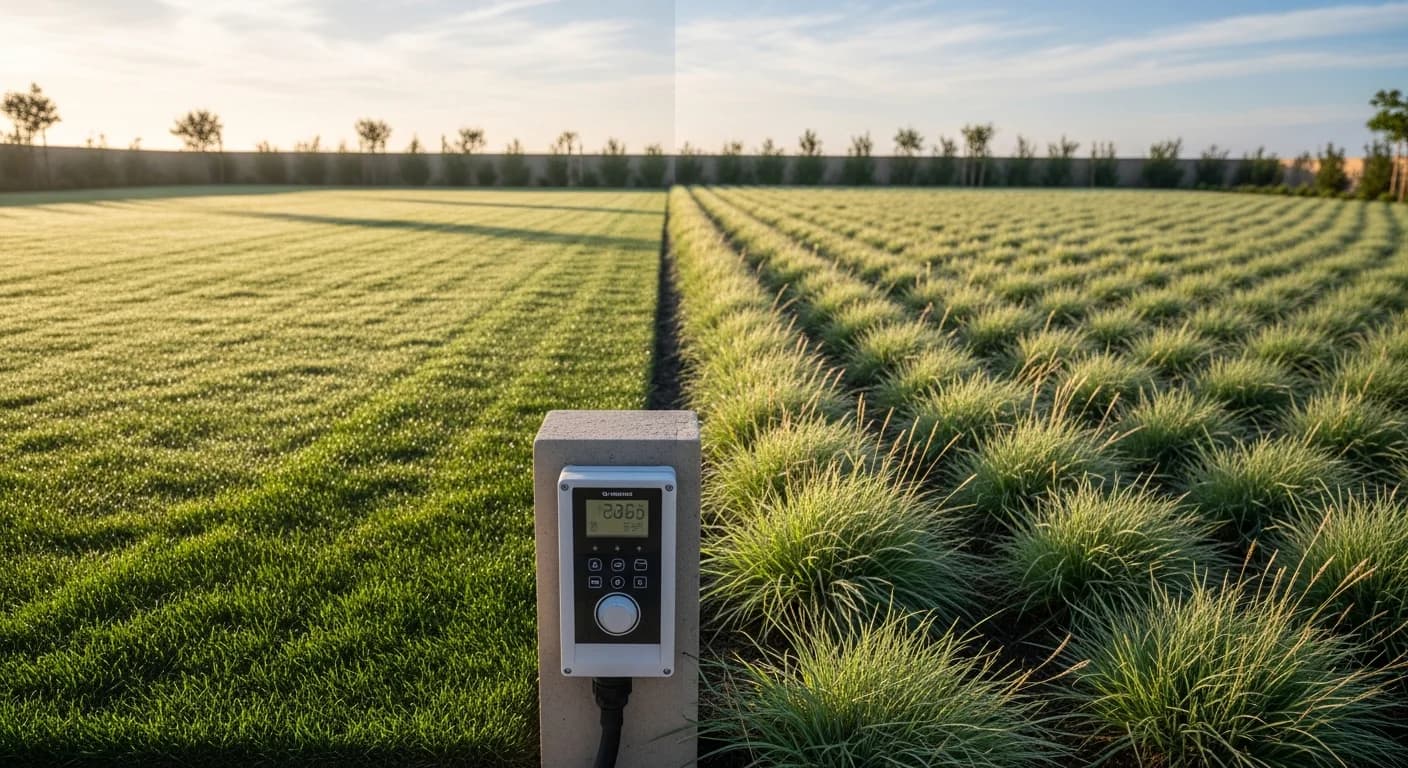
The first site walk should classify every turf area by use. Play lawns, gathering lawns, pet areas, and genuinely active community spaces need a different conversation from narrow strips, medians, sign lawns, sloped decorative grass, and turf that nobody uses. Photograph each zone, mark it on a site plan, and record whether it is irrigated with potable or recycled water.
Board rule
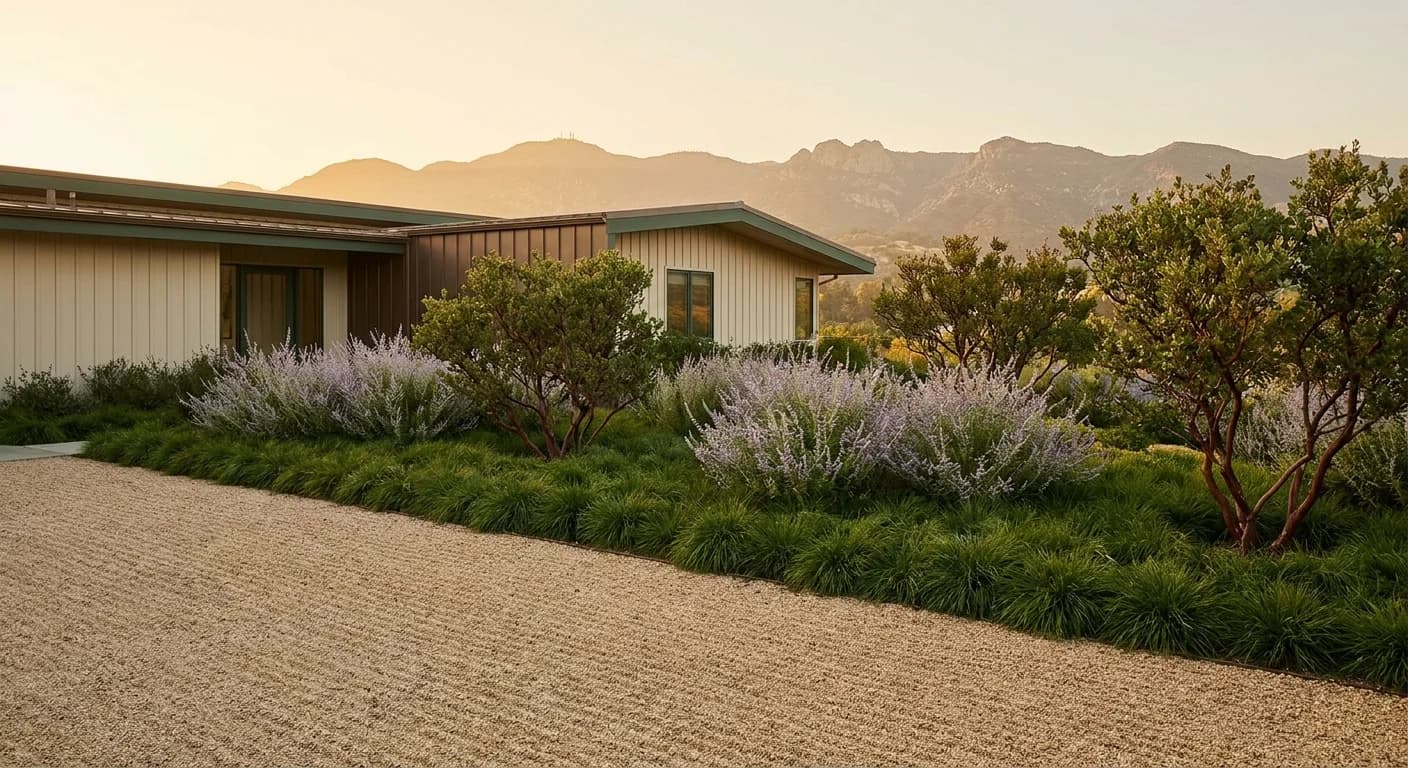
Do not approve a replacement palette from a spreadsheet. Approve a site plan that shows turf function, tree protection, irrigation zones, maintenance access, and how the finished common area will look from the street.
Protect trees before removing grass
A common failure is removing turf and irrigation around mature trees, then watching canopy stress appear months later. Grass may be nonfunctional, but the water it received may have been supporting roots. Conversion plans should separate turf irrigation from tree support, add deep watering where needed, and avoid trenching through critical root zones.
Phase the work around risk and visibility
Boards usually get the best outcome by phasing. Start with the highest visibility nonfunctional turf and the zones with the clearest water waste. Then move to larger common areas once the palette, irrigation method, and maintenance rhythm have been tested. A three-year capital plan is often more defensible than a single rushed conversion.
What a serious proposal should include
A board-ready proposal should include existing turf classification, proposed replacement zones, irrigation changes, drainage notes, tree protection, plant establishment expectations, maintenance implications, and rebate paperwork responsibilities. It should also state clearly that agency approval and funding are governed by the agency, not the contractor.